
Bed Bug Treatment Process Manhattan | What Happens Step by Step
From free inspection to confirmed clearance. Here is exactly what to expect when you schedule bed bug treatment in Manhattan.
Quick Answer
The bed bug treatment process in Manhattan begins with a free inspection and written report, followed by preparation instructions, the treatment itself (heat or chemical), and a follow-up visit 10 to 14 days later. Most single-unit treatments in Manhattan apartments are completed in one day with clearance confirmed at the follow-up.
The Complete Treatment Process, Step by Step
Understanding what happens at each stage helps you prepare and know what to expect. There are no surprises in this process. Here is how we handle every treatment from first contact to clearance.
Free Inspection and Written Report
Every engagement starts with a professional inspection at no charge. We examine all primary and secondary harborage areas: mattress seams, box springs, headboards, baseboards, electrical outlets, upholstered furniture, and in pre-war Manhattan apartments, behind radiator covers and in plaster gaps. You receive a written report with our findings, the harborage locations identified, and our treatment recommendation before any cost is discussed.
Treatment Recommendation and Quote
Based on the inspection findings, we recommend either heat treatment or chemical treatment. The recommendation depends on the severity and distribution of the infestation, the type of unit, and your preferences. We explain both options clearly and answer every question before you decide. There is no pressure to choose the more expensive option. We recommend what we believe will work most effectively for your specific situation.
Pre-Treatment Preparation
Before we arrive for treatment, you complete a preparation checklist we provide. The specific items on the checklist vary by treatment type. For heat treatment, preparation includes removing candles, aerosols, pressurized cans, live plants, pets, certain electronics, and heat-sensitive items. For chemical treatment, preparation focuses on clearing access to baseboards, bed frames, and furniture, and laundering bedding and clothing on high heat. We provide the checklist in writing and answer any questions about it in advance.
Treatment Day
Heat treatments take 6 to 8 hours from equipment setup to completion. Chemical treatments take 2 to 4 hours. You must vacate the unit during treatment. For heat treatments, you also need to arrange for pets to stay elsewhere for the duration. We manage all equipment setup, monitoring, and breakdown. In Manhattan walk-up buildings, we stage equipment in hallways and carry it up stairs. After treatment, we document the outcome and leave the unit ready for re-entry.
Post-Treatment Instructions
After treatment, there are specific steps you should follow in the first 24 to 48 hours. These vary by treatment type. We provide written post-treatment instructions before we leave. Following these instructions correctly improves the outcome and reduces the risk of any surviving eggs hatching into a secondary population. We are available by phone for any questions during this period.
Follow-Up Visit at 10 to 14 Days
We schedule a follow-up inspection 10 to 14 days after treatment. This timing matters: the incubation period for bed bug eggs is 6 to 10 days, so any eggs that survived treatment will have hatched by the time of the follow-up. The follow-up inspection confirms clearance or identifies whether additional treatment is needed. For most single-unit Manhattan apartments treated with heat, this is a clearance visit with no further treatment required.
Preparation: What You Need to Do Before Treatment Day
Preparation is the part of the process that is most in your control, and it makes a meaningful difference in the outcome. A unit that is well-prepared reduces treatment time and improves the likelihood that the treatment reaches every harborage location.
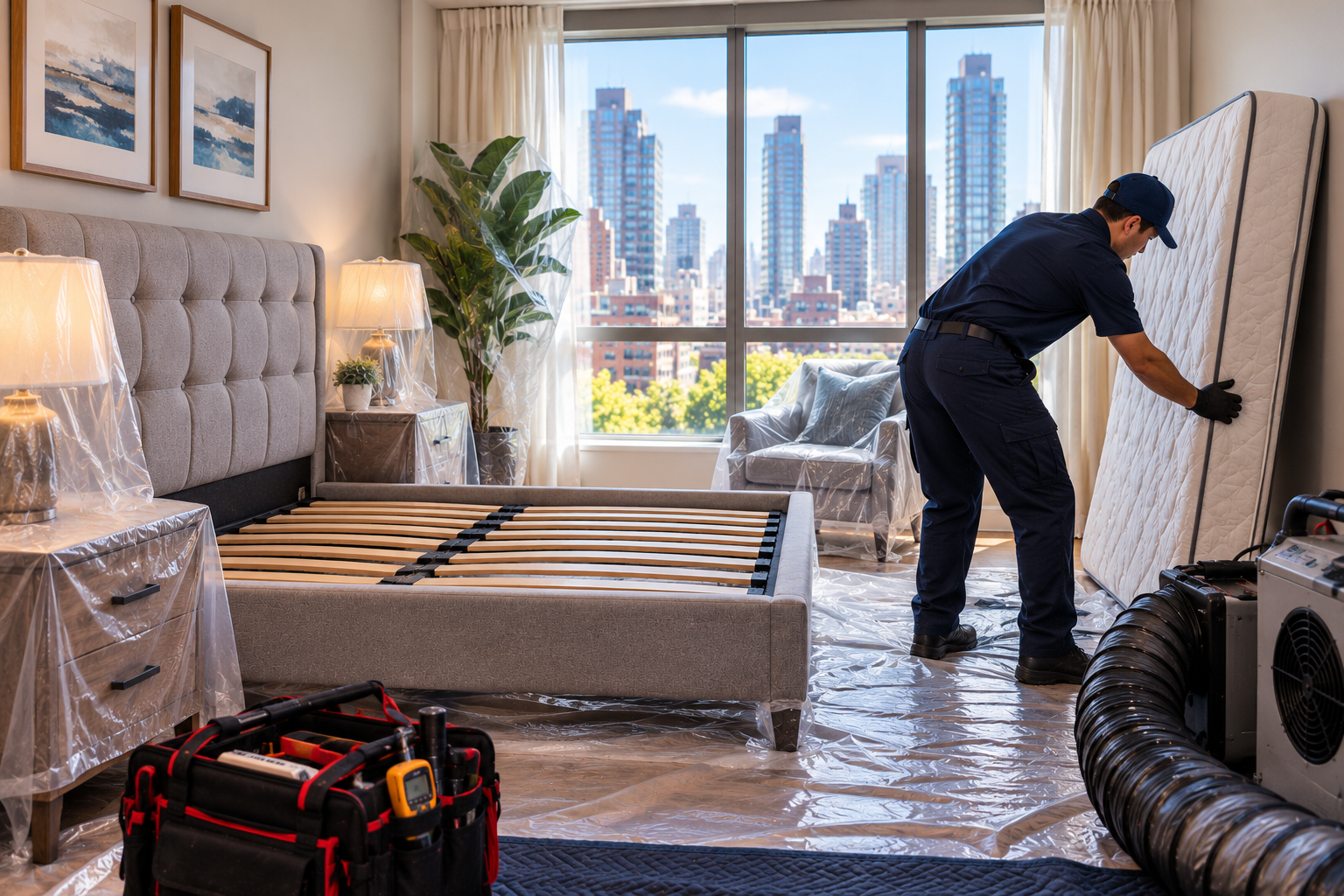
The preparation checklist we provide is specific to your treatment type. Here are the general categories:
- Bedding and clothing: Launder on high heat and seal in clean bags until after treatment.
- Furniture access: Pull beds and furniture 12 to 18 inches away from walls so we can treat behind them.
- Closet access: Clear floor space in closets so we can inspect and treat the baseboards inside.
- Heat-sensitive items (heat treatment only): Remove candles, aerosols, plants, pets, and anything that cannot tolerate 130 degrees for several hours.
- Electronics (heat treatment only): Laptops, tablets, and external hard drives should be removed. Televisions and most desktop computers can stay.
- Vacate the unit: You and all household members must leave before we begin and not return until we clear the unit after treatment.
What Happens During the Treatment
Once the unit is prepared and vacated, our process is systematic. For heat treatment, we stage equipment outside the unit and carry it in, then set up heating units and fans at specific locations throughout the apartment. We monitor temperature remotely throughout the process to confirm every area reaches and holds 120 degrees Fahrenheit for the required duration.
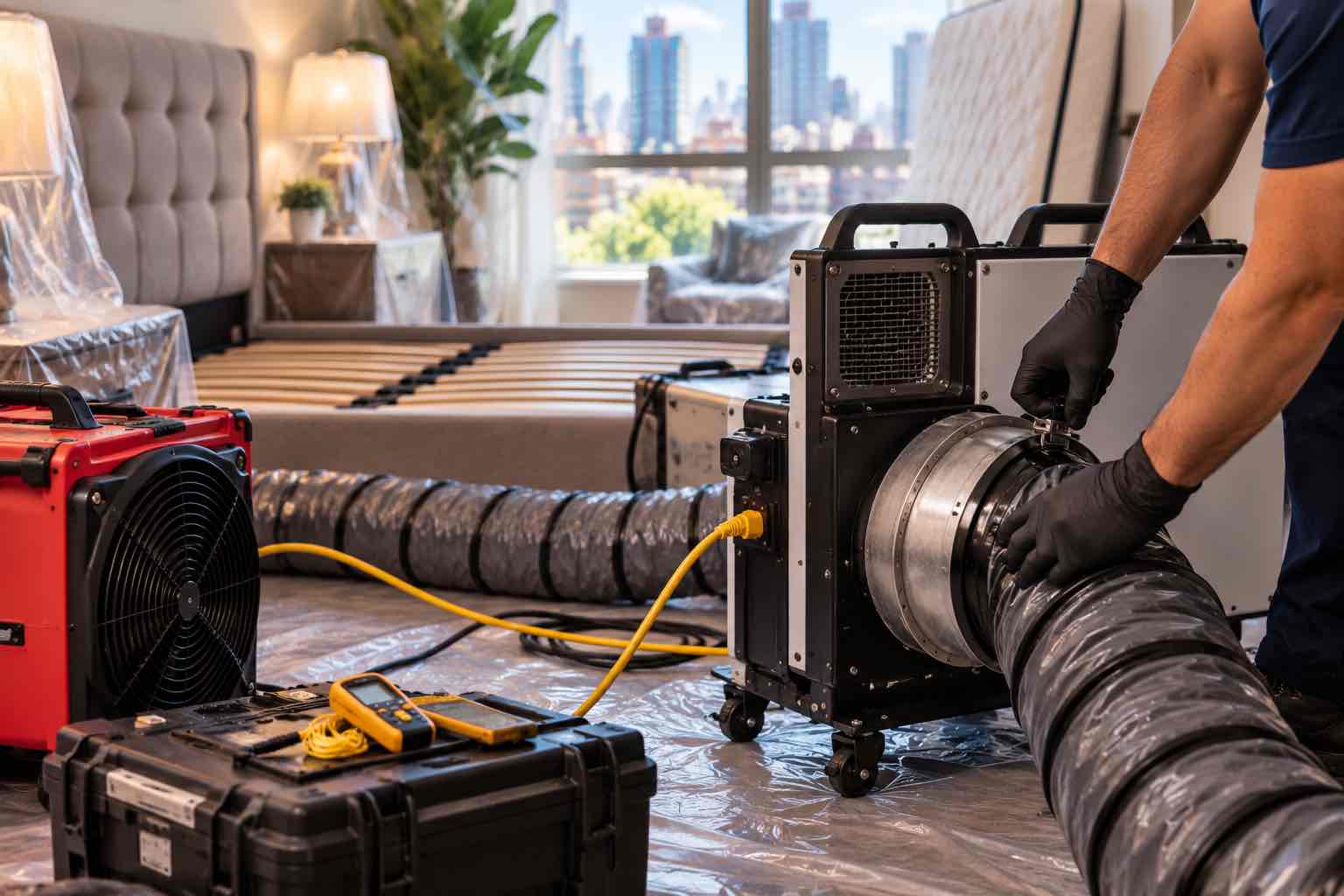
In Manhattan walk-up buildings, equipment staging in the hallway is standard. We work with building management and follow building protocols for elevator use, hallway use, and noise restrictions where they apply. In high-rise buildings with doorman service, we coordinate with building staff on access and timing.
For chemical treatment, we apply EPA-registered insecticides to all identified harborage areas. Application includes baseboards, bed frame joints, box spring folds, nightstand interiors, and outlet covers. We use residual formulations in wall voids and non-residual contact products in exposed areas. The combination ensures coverage across active populations and harborage locations where contact sprays alone cannot reach.
Manhattan-Specific Considerations
Treating bed bugs in Manhattan is different from treating them in a standalone house. The density of Manhattan’s housing stock, the age of the buildings, and the way units share walls and infrastructure create treatment challenges that do not exist in the suburbs. We are experienced in every type of Manhattan housing.
Pre-War Buildings
Pre-war Manhattan apartments built between 1900 and 1940 have original plaster walls, wood floors with gaps, and radiator systems that create dozens of travel corridors between units. We inspect and treat these entry points as part of standard service. In buildings with confirmed multi-unit infestations, we coordinate with building management to sequence treatments across affected units.
High-Rise Co-Ops and Condos
High-rise buildings in Midtown, the Upper East Side, the Upper West Side, and the Financial District typically have modern construction with fewer structural gaps, but HVAC systems and shared elevator service can create infestation pathways. We work within building access policies, which often include specific hours for vendor access, elevator reservations, and service entrance requirements.
Studio and One-Bedroom Apartments
Manhattan studio and one-bedroom apartments are typically treated in a single session. The compact footprint makes heat treatment particularly effective because achieving and maintaining lethal temperature throughout the space is straightforward. We size our equipment for the specific square footage of each unit and adjust placement to account for room configuration.
After Treatment: What to Expect in the Days That Follow
After heat treatment, you can return to the unit as soon as it has cooled to a comfortable temperature, typically one to two hours after treatment ends. There is no chemical residue, no off-gassing period, and no restrictions on using the bed or furniture. You may see dead bed bugs in the following days as you clean. This is normal and is not a sign of treatment failure.
After chemical treatment, you should allow the treated surfaces to dry completely before contact, typically two to four hours. Residual chemical treatments continue working for several weeks after application. During this period, it is important not to deep-clean baseboards or furniture surfaces, as this removes the residual product before it has done its work. We provide specific guidance on what cleaning is safe and what should be avoided in the residual period.
In both cases, we recommend using mattress encasements after treatment if you are not already using them. Encasements trap any surviving bed bugs in the mattress where they will eventually starve, and they prevent the mattress from becoming a harborage in the future. We can provide encasements at the time of treatment.
For more on the specific differences between heat and chemical treatment options, see our heat treatment page. For a complete overview of our bed bug removal services, see our bed bug removal page.