
How to Prepare for Bed Bug Treatment in Your Manhattan Apartment
Quick Answer
Preparing for bed bug treatment in a Manhattan apartment requires laundering bedding and clothing on high heat, pulling furniture away from walls, clearing floor space in closets, and for heat treatment, removing candles, aerosols, plants, and pets. Preparation done correctly improves treatment effectiveness and reduces the likelihood of a follow-up treatment being needed.
Preparation is the step that is most in your control, and it makes a real difference in the outcome of professional bed bug treatment. A well-prepared Manhattan apartment allows the treatment to reach every harborage location without obstruction, reduces treatment time, and gives the product the best possible contact with the infestation. A poorly prepared apartment means areas of the infestation may be shielded from treatment, which can extend the number of visits needed.
This guide walks through preparation for both heat treatment and chemical treatment. The specific preparation steps differ between the two methods, so read the section that applies to the treatment you have scheduled. If you are not sure which treatment type you are scheduled for, call us and we will confirm.
Preparation for Heat Treatment
Heat treatment raises the temperature inside your apartment to 120 degrees Fahrenheit or higher and sustains that temperature for 4 or more hours. That level of heat kills bed bugs at every life stage, but it will also damage certain items in your apartment if they are not removed before treatment. Preparation for heat treatment focuses on removing heat-sensitive items and clearing access for the equipment and the circulation of heated air.
Remove These Items Before Heat Treatment
- Candles and wax items: Candles, wax melts, crayon collections, and similar items will melt at heat treatment temperatures. Remove all of these.
- Aerosol cans and pressurized containers: Hairspray, spray paint, fire extinguishers, and any other pressurized container must be removed. They can rupture at elevated temperatures.
- Live plants: Plants will not survive heat treatment. Remove them or arrange for them to be taken out of the apartment before treatment day.
- Pets: All pets including fish, reptiles, birds, cats, and dogs must be out of the apartment during heat treatment. Make arrangements for them to stay elsewhere for the full treatment day.
- Certain medications: Some medications are heat-sensitive. Check with your pharmacist if you are uncertain, and remove medications that cannot tolerate heat from the apartment or place them in a sealed cooler.
- Laptops, tablets, and external hard drives: Remove portable electronics. Desktop computers and televisions can generally remain, but portable electronics should be taken out.
- Vinyl records and wax-coated items: These will warp or melt. Remove them.
- Fine art and collectibles: If in doubt, take it out. We will provide guidance during the pre-treatment consultation if you have specific items you are concerned about.
Set Up Access for Heat Treatment
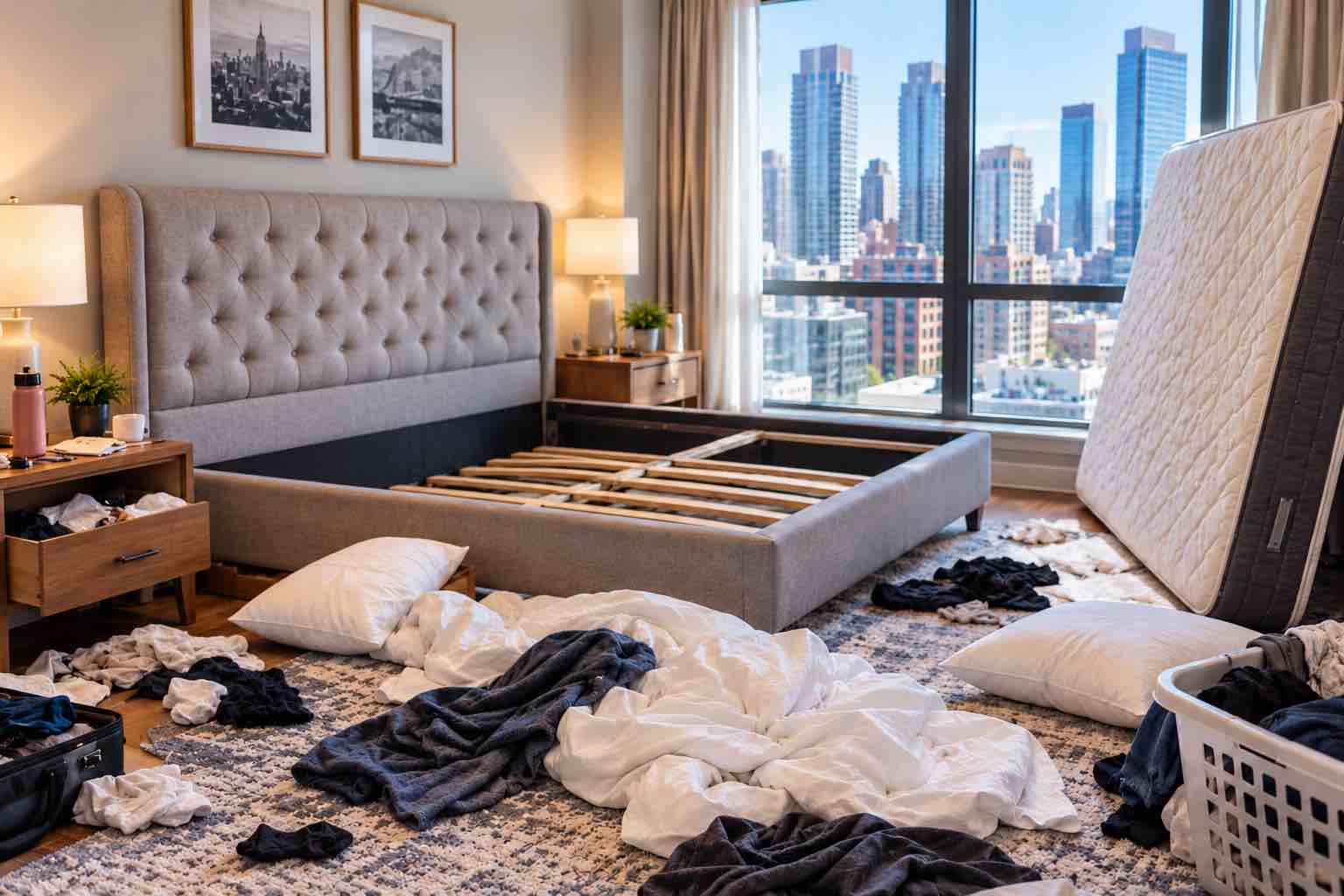
- Pull all beds, dressers, sofas, and large furniture 12 to 18 inches away from every wall so heat can circulate behind them.
- Open all interior doors including closet doors, bathroom doors, and cabinet doors so heat circulates into every enclosed space.
- Remove all items from the floor of closets to allow heat to reach baseboard areas inside closets.
- Leave bedding and clothing in place on the bed and in closets. Do not bag them. Heat treatment will kill any bed bugs in bedding and clothing in place, which is the point.
- Do not place items in the oven or refrigerator to protect them. These appliances should remain closed during treatment.
Preparation for Chemical Treatment
Chemical treatment uses EPA-registered insecticides applied to harborage areas. Unlike heat treatment, chemical treatment does not require removing heat-sensitive items. Preparation focuses on clearing physical access to the harborage locations we need to treat and laundering bedding and clothing to reduce the active population before treatment.
Launder Bedding and Clothing
- Wash all bedding, pillowcases, and bed skirts in the hottest water available and dry on high heat for at least 30 minutes. This kills any bed bugs and eggs in these items.
- Bag the laundered items in clean garbage bags and seal them. Do not return them to the bed until after treatment and re-entry.
- Launder clothing in the bedroom, including anything in drawers or on the floor. Wash and dry on high heat. Seal in clean bags until after treatment.
Clear Access for Chemical Treatment
- Pull all beds, nightstands, and upholstered furniture away from walls by 12 to 18 inches.
- Remove items stored under the bed and temporarily bag them. Bed frames and box spring undersides are primary treatment areas that need clear access.
- Clear floors in closets and along all baseboards. We need access to the baseboard along every wall in every room.
- Do not clean baseboards or vacuum along walls on the day of treatment or for the two weeks after. You will remove the residual chemical product that is doing the work.
On Treatment Day
For both heat treatment and chemical treatment, you and all household members must vacate the apartment before treatment begins and remain out until we clear you for re-entry. For heat treatment, re-entry is after the apartment has cooled, typically 1 to 2 hours after treatment ends. For chemical treatment, re-entry is typically 2 to 4 hours after application, once treated surfaces are dry.
Do not send children or pets back into the apartment until the re-entry period has passed and we have confirmed re-entry is safe. We provide specific re-entry instructions at the time of treatment and are available by phone with any questions during the re-entry period.
What Not to Do Before Treatment
There are several things that are commonly done in the hope of reducing an infestation before treatment but that actually make treatment harder. Do not use over-the-counter foggers or bug bombs. These scatter bed bug populations into areas that are harder to treat without killing them, and they create a chemical residue that can interfere with professional products. Do not throw out your mattress or furniture before the inspection and without professional guidance. In most cases this is not necessary and it introduces the risk of spreading the infestation through your building when you move the furniture through the hallway. Do not apply any chemical products to the baseboards or furniture before treatment. We will treat these areas with products specifically selected for bed bug control, and pre-treatment with the wrong product complicates the process.
For more on what happens during and after treatment, see our treatment process page. For information on heat treatment specifically, see our heat treatment page.



2 Comments